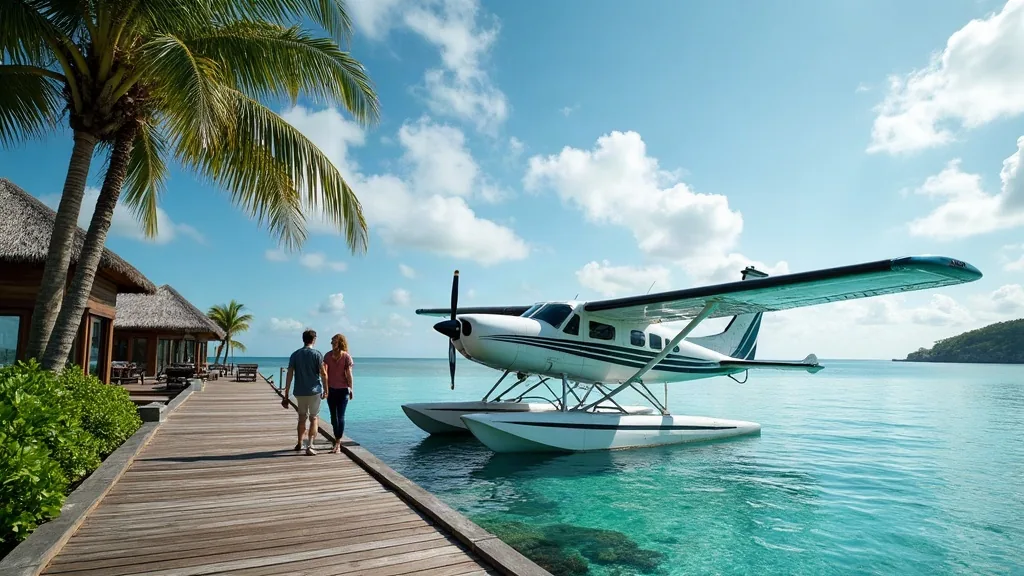
On-demand means the desk sources an available CASR Part 135 seaplane for your date, matches it to certified water aerodromes at both ends (or an airport-to-water pairing), and confirms within operator duty and weather limits. Same-day is possible only where an aircraft is already positioned near your origin point — everything else needs a short planning window, and no lead time can be guaranteed until an operator physically confirms the aircraft.
How fast can an on-demand charter be confirmed?
Confirmation speed depends on where the nearest Part 135 seaplane happens to be sitting on the day you ask, not on how far in advance you contact the desk. An aircraft already on the water near your departure point can sometimes fly the same afternoon; one that has to reposition cannot.
| Lead time | What it realistically unlocks | Honest caveat |
|---|---|---|
| Same-day | A charter only if a Part 135 aircraft is already positioned near your origin and daylight/weather allow the leg | Rare outside peak positioning windows; never promised until the operator confirms |
| 24–72 hours | Most single-leg point-to-point requests, including one short repositioning flight | Subject to crew duty hours and current sea state at both ends |
| 7+ days | Multi-stop itineraries, corporate/production charters, and any request needing coordination with coastal radio or a Vessel Traffic Service (VTS) unit | Gives the widest choice of aircraft and the best chance of your preferred timing |
The desk does not hold aircraft on standby speculatively — every lead-time figure above is a planning guide, not a booking guarantee. The actual confirmation comes from the licensed operator, in writing, before payment is discussed.
Which pairings are possible?
Three pairing types cover almost every on-demand request: airport-to-water (a standard runway departure ending at a certified water aerodrome), water-to-water (both ends on certified water areas), and water-to-airport (the reverse). All three require the destination water aerodrome to be certified or registered under CASR 139 sub-regulation 139.101, the same regime Indonesia’s Directorate General of Civil Aviation (DGCA) applies to conventional airports, since DGCA adopted its seaplane-base standards from FAA Advisory Circular 150/5395-1 and published them as Manual of Standard CASR Part 139 Volume III (Seaplane Bases/Waterbases).
Once the aircraft is on the water, CASR Part 91 requires it to keep clear of vessels and give way under standard right-of-way rules — a seaplane does not have priority over a boat simply because it can fly. A ministerial regulation enacted 22 August 2025 (State Gazette 2025 No. 620) reinforces this by requiring seaplane operations on water to follow shipping-sector law and obliging the water aerodrome organiser to coordinate with coastal radio stations and Vessel Traffic Service (VTS) units before movement. In practice this means the operator, not the charter desk, clears each arrival and departure with the relevant maritime authority at that specific water aerodrome.
| Pairing | Departure point | Arrival point | Extra coordination |
|---|---|---|---|
| Airport-to-water | Certified airport runway | Certified/registered water aerodrome | VTS/coastal radio clearance at the water end only |
| Water-to-water | Certified water aerodrome | Certified water aerodrome | VTS/coastal radio clearance at both ends |
| Water-to-airport | Certified/registered water aerodrome | Certified airport runway | VTS/coastal radio clearance at the water end only |
What decides feasibility?
Five factors decide whether an on-demand request can actually fly, independent of budget:
- Aircraft positioning — where the nearest available Part 135 aircraft is parked relative to your requested origin.
- Daylight — seaplane operations are planned around usable daylight hours at both the departure and arrival water aerodrome.
- Sea state — surface chop at the water aerodrome affects whether a safe touchdown and taxi are possible that day.
- Tide — DGCA base standards call for a preferred water depth of 1.8 metres, with a minimum of 1 metre adequate for single-engine operations only; a low tide can take a shallow water aerodrome below that minimum.
- Crew duty — pilots and cabin crew operate under duty-time limits set for Part 135 charter work, which can cap how many legs a single aircraft flies in one day regardless of demand.
Water aerodrome geometry matters too: DGCA’s Keputusan Direktur Jenderal Perhubungan Udara Nomor KP 206 Tahun 2021 sets minimum technical specifications for water aerodromes serving seaplanes up to 30 seats, including a taxi channel at least 45 metres wide oriented into the prevailing wind or current where possible, and a water operating area length that increases by 7 percent for every 300 metres of elevation above sea level. DGCA’s own records list two registered seaplane bases in Indonesia, serving Cessna 208A Caravan and DHC-6 Twin Otter aircraft configured for nine seats — a small, specific fleet footprint that is part of why positioning drives lead time more than distance does. Research also points to Bawah Island in the Anambas Islands as a certified luxury-island water aerodrome, and to Banyuwangi as a location being positioned as a regional hub linking land and water operations to a Bali seaplane network.
Flights operating more than 50 nautical miles from shore may not take off without a life preserver or approved flotation device for every occupant, and any flight beyond 30 minutes or 100 nautical miles from shore requires specified survival equipment including life preservers fitted with locator lights — requirements the operator, not the passenger, is responsible for meeting under CASR Part 91.
How does the coordination process work?
- You send the request. Pax count, luggage, origin/destination, preferred date window, and purpose go to the desk via WhatsApp or email.
- The desk checks positioning. We confirm which Part 135 AOC holder has an aircraft realistically available for your window and pairing.
- The operator quotes and confirms. Aircraft type, timing, and price come directly from the licensed operator — this is a date-stamped quote, not a published fare, because no official national benchmark rate exists for seaplane charter in Indonesia.
- You receive a written confirmation before any payment is arranged, covering aircraft, crew, and the certified water aerodromes or airports at both ends.
Only holders of a valid CASR Part 135 Air Operator Certificate may conduct the charter itself. Under Aviation Law No. 1 of 2009, foreign carriers cannot transport passengers between two points inside Indonesia, and the Transportation Ministry has confirmed that routing this indirectly through an online travel platform still violates that rule — so every domestic leg on an on-demand itinerary is flown by an Indonesian AOC holder, arranged rather than operated by this desk.
Charter options at a glance
| Charter type | Typical use | Price |
|---|---|---|
| Single-leg point-to-point | One origin, one destination, same day if positioned | Quoted per request by the operator |
| Multi-stop itinerary | Several water aerodromes or a mixed water/airport route in one day | Quoted per request, depends on positioning and duty limits |
| Corporate/production charter | Dedicated aircraft for a filming day or executive schedule | Quoted per request, usually booked 7+ days out |
| Empty-leg positioning flight | A Part 135 holder’s own repositioning leg, sold as the whole aircraft | Offered only when a licensed operator publishes one; never sold as individual seats |
Seasonal planning helps but never guarantees a slot: Indonesia’s Meteorological, Climatological and Geophysical Agency (BMKG) generally places the rainy season from October to March and the dry season from April to November, driven by monsoon winds moving between Australia and Asia, and publishes Dry Season and Rainy Season Outlooks alongside ENSO and Indian Ocean Dipole monitoring that operators use for route planning.
Request an on-demand quote
Send pax count, luggage, origin, destination, and your preferred date window to WhatsApp 6281139414563 — the desk checks positioning against Part 135 operators and comes back with a real quote, not a published rate card. Corporate accounts and recurring charter programmes can reach the desk directly at bd@juaraholding.com. Juara Holding Group is an independent charter coordination desk, established in 2015, that arranges flights with licensed Part 135 operators; it does not own or operate aircraft.
Frequently Asked Questions
Can an on-demand seaplane charter really depart the same day I ask?
Only when a Part 135 aircraft is already positioned near your departure point and daylight, sea state, and tide at the water aerodrome all allow it. This is the exception, not the rule — most same-day requests outside an aircraft’s existing position turn into a 24–72 hour confirmation instead, once an operator checks availability.
Why does the desk quote a price instead of listing a fixed rate?
No official national benchmark exists for seaplane charter pricing in Indonesia as of 2026. Every rate is a commercial decision made by the individual Part 135 Air Operator Certificate holder, based on aircraft type, distance, and positioning that day, so the desk gathers a live, date-stamped quote rather than publish one figure that would mislead every future traveller.
Do I need a certified water aerodrome at both ends of my charter?
Not always — an airport-to-water or water-to-airport pairing uses a standard runway at one end. Whichever end lands on water must be certified or registered under CASR 139 sub-regulation 139.101, following DGCA’s Manual of Standard CASR Part 139 Volume III, since a water aerodrome is legally treated the same as an airport.
Can a foreign airline fly a domestic leg of my charter to save time?
No. Aviation Law No. 1 of 2009 prohibits foreign carriers from carrying passengers between two points inside Indonesia, and the Transportation Ministry has stated that arranging this indirectly through an online travel agent still breaches the rule. Every domestic leg must be flown by an Indonesian Part 135 AOC holder.
What happens if tide or sea state changes after my charter is confirmed?
The operator reassesses before departure. DGCA base standards call for a preferred 1.8-metre water depth, with 1 metre the minimum for single-engine aircraft only, so a dropping tide or rising chop at the water aerodrome can delay or reroute a confirmed leg — this is a safety decision made by the licensed crew, not the coordination desk.