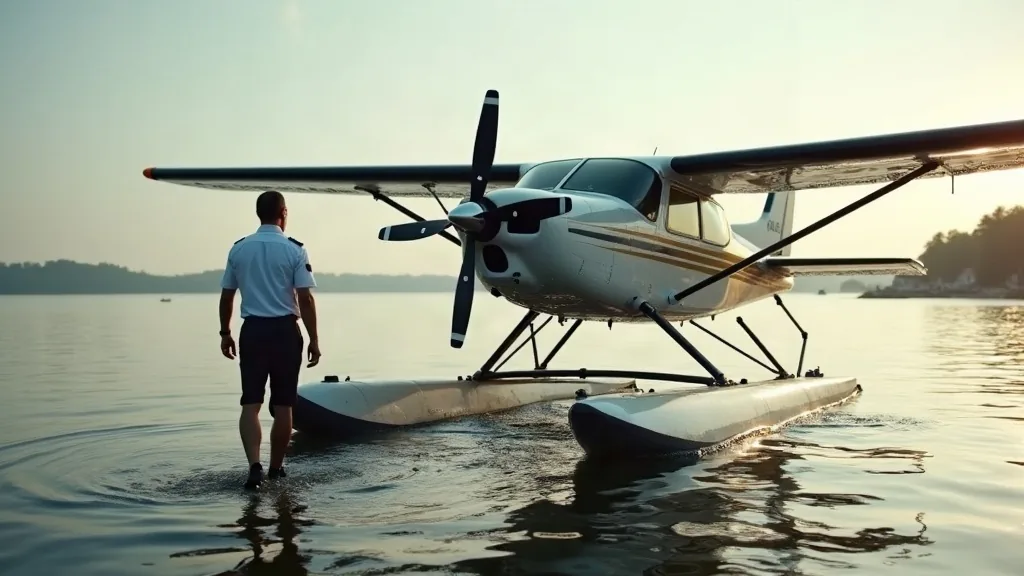
Film Production Seaplane Charter Indonesia
A production seaplane charter puts an aircraft to work as location transport and, where the operator approves the airframe and route, as a camera platform. The Juara Holding Group coordination desk builds the shoot-day plan around aerial-filming permissions, marine-park restrictions, repeated water landings and the fuel and maintenance breaks a multi-location schedule needs, working only with licensed Part 135 operators.
What Can a Seaplane Do on a Shoot?
A seaplane earns its place on a production budget when a shoot needs to move between water-landing sites that share no runway, or when the aircraft becomes part of the coverage itself.
| Shoot task | What it involves | Coordination note |
|---|---|---|
| Crew and talent transport | Moving cast, director, DOP and gear between set locations | Booked as passenger legs under the operator’s standard manifest |
| Low-level aerials (within legal minimums) | Establishing shots and tracking passes at altitudes the operator’s ops manual and CASR permit | Camera-mount or open-door filming needs the aircraft owner’s written approval, confirmed per shoot |
| Location scouting | One flight over several candidate water-landing sites before the shot list locks | Quoted and flown separately from the confirmed shoot day |
| Liveaboard rendezvous | Landing beside a chartered liveaboard for marine-unit pickup or cast transfer | Vessel position and sea state confirmed with the boat operator before the flight is filed |
| Multi-island shoot days | Sequencing several locations into one day using the aircraft’s water-landing range | Depends on daylight hours, fuel stops and the tide window at each site |
Which Permits and Approvals Apply?
Only a holder of a valid CASR Part 135 Air Operator Certificate may fly a commercial charter in Indonesia, and a production charter is no exception. The Directorate General of Civil Aviation (DGCA), under the Ministry of Transportation, regulates water-landing operations through the Manual of Standard CASR Part 139 Volume III (Seaplane Bases), adapted from FAA Advisory Circular 150/5395-1, and through Keputusan Direktur Jenderal Perhubungan Udara Nomor KP 206 Tahun 2021, which sets minimum technical and operational specifications for water aerodromes serving seaplanes up to 30 seats.
A ministerial regulation enacted 22 August 2025 (State Gazette 2025 No. 620) requires water aerodrome organisers to coordinate with coastal radio stations and Vessel Traffic Services (VTS) units, and requires seaplane water operations to follow shipping-sector rules alongside aviation ones. CASR Part 91 requires the aircraft to give way to vessels under right-of-way rules, and sets flotation and survival-gear minimums for flights beyond 50 NM or 30 minutes from shore — relevant on anything shot from open water.
A shoot typically also needs:
- Aviation filming permission from the operator, confirmed per shoot against the exact aircraft, crew and route
- Local authority or village consent for landings and ground activity at each site
- Marine protected area rules, where a location sits inside a national park or conservation zone — this sits with the park authority, separate from the flight permit
- Drone-from-aircraft restrictions, which add their own approval layer, confirmed per shoot
Aviation Law No. 1 of 2009 bars foreign carriers from flying passengers between two points inside Indonesia, and the Transportation Ministry has confirmed that routing a domestic leg through a foreign intermediary does not get around this. Every domestic leg on a production charter is flown by an Indonesian AOC holder.
How Are Heavy Rigs and Dangerous Goods Handled?
Camera rigs, gimbals and stabiliser mounts go through the same weight-and-balance process as any other cargo — the operator needs the rig list and total load before confirming aircraft type and seat count. Spare lithium batteries for cameras, drones and monitors are dangerous goods and must be declared ahead of the flight, packaged to the operator’s own procedure rather than a production’s usual kit-bag habits.
Insurance and risk assessment sit with the production and the operator directly; the desk does not underwrite risk or certify equipment, and any special rigging such as external mounts or door-off configurations needs the operator’s written sign-off before it goes into a shoot plan.
How Is a Shoot Day Scheduled?
Crew duty-time limits under the operator’s safety management system set the outer edge of a flying day, with daylight, tide and weather inside that. BMKG (the meteorology agency) publishes Dry Season and Rainy Season Outlooks and monthly rainfall analysis; the dry season generally runs April to November and the rainy season October to March, driven by monsoon winds shifting between Australia and Asia. A dry-season window generally holds fewer weather delays, while a rainy-season schedule needs more contingency buffer built in from the start.
Tide timing matters at each water-landing site, since depth and taxi-channel access change through the day, so a multi-location shoot has to sequence stops rather than let the aircraft wait on tide at one site while burning daylight at the next. Fuel and maintenance breaks are planned into the route, not improvised mid-shoot.
Charter Options and Indicative Structure
No official published rate exists for seaplane charter hours, legs or days in Indonesia — every line below is a structure, quoted per shoot once the operator has the route, headcount and rig list.
| Shoot format | Typical structure | Rate basis |
|---|---|---|
| Single-location half-day charter | One water-landing site, crew in and out | Quoted per shoot after route and headcount are confirmed |
| Multi-location full-day charter | Two to four sites sequenced with fuel and maintenance breaks | Quoted per shoot; leg count depends on daylight and tide windows |
| Multi-day island-hopping shoot | Charter held across consecutive days, aircraft based near the production | Quoted per shoot under the operator’s own commercial terms |
| Standby or on-call day | Aircraft and crew reserved but not flown unless called | Quoted per shoot under the operator’s standby terms |
How Booking Works
- Send your shoot brief — schedule, locations, rig list and crew count — to bd@juaraholding.com
- The desk checks proposed water-landing sites against DGCA base standards and confirms operator availability
- A scouting call over WhatsApp (6281139414563) aligns locations, permits and any marine-park or village consent needed
- The operator issues a written quote and a permit checklist tied to the exact shoot dates
- Once confirmed, the desk coordinates ground handling, fuel stops and weather-hold contingency ahead of day one
Send your shoot brief to bd@juaraholding.com — schedule, locations, rig list and crew count — or message WhatsApp 6281139414563 to set up a scouting call. Juara Holding Group is an independent production logistics desk that coordinates with licensed Part 135 operators; it does not operate the aircraft itself.
Frequently Asked Questions
Does a seaplane charter for film work include using the aircraft as a camera platform?
Only when the operator approves it in writing. Camera mounts, open-door filming or non-standard door configurations need the aircraft owner’s sign-off, confirmed per shoot alongside CASR altitude minimums and a standard weight-and-balance check — a standard passenger charter does not assume camera-platform use on its own.
Can a production land at a water site that has no formal seaplane base?
It depends on depth, wind exposure and DGCA’s water aerodrome criteria — a preferred depth of 1.8 metres, or 1 metre minimum for single-engine aircraft, with a taxi channel at least 45 metres wide. The desk checks each proposed site against these standards before adding it to a shoot-day route.
Who handles filming permits inside a marine protected area?
Marine-park or conservation-zone filming consent sits with the park authority, separate from the aviation filming permission the AOC operator holds. The desk flags any location inside restricted waters early in planning so the production can apply for that consent alongside the flight booking, rather than finding out on shoot day.
Can a foreign production company charter the aircraft directly for a multi-island shoot?
No — any leg flown between two points inside Indonesia needs an Indonesian Part 135 AOC holder, under Aviation Law No. 1 of 2009’s ban on foreign carriers flying domestic passenger legs. A foreign production typically works through the desk or a local production-services company, which contracts the Indonesian operator on its behalf.
How far ahead should a production book a seaplane charter?
There is no fixed lead time in public DGCA guidance, so the desk works backward from the shoot dates: permit confirmation, operator availability and site checks each take time, and marine-park or village consent can add days. Sending the shoot brief as early as the schedule allows gives the operator room to confirm the aircraft and route in writing before the crew travels.