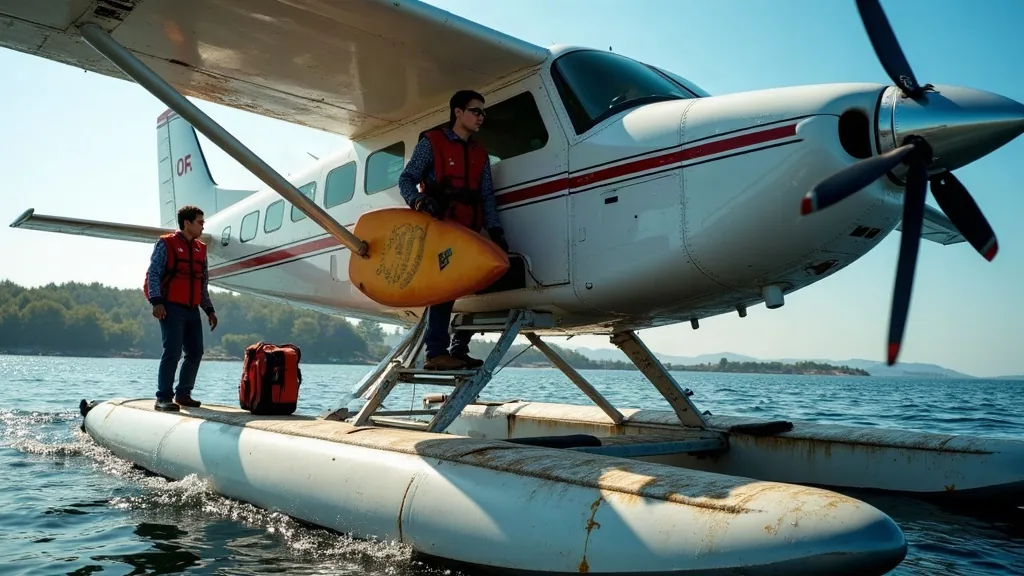
A private seaplane charter in Indonesia is always the whole aircraft — individual seat sales on a charter flight are not permitted under CASR Part 135 practice. This desk arranges the flight for you with a licensed Indonesian operator holding a valid Part 135 Air Operator Certificate (AOC), routing between any certified water aerodrome or airport you specify. Send your route and dates to WhatsApp 6281139414563 and the desk returns operator options with a written quote.
Who is this for?
A private charter suits travelers who need the whole cabin and a schedule built around them, not a shared seat on a fixed timetable. Typical requests this desk handles:
- Families and small groups who want one aircraft, one departure time, and no transfers through a hub.
- Villa and resort guests connecting between a mainland airport and a water aerodrome close to their accommodation.
- Yacht owners and charter guests who need an airport-to-yacht rendezvous timed to a vessel’s anchorage, coordinated around tide and weather windows.
- Honeymoon, proposal, or milestone flights where privacy and a fixed departure time matter more than cost per seat.
- VIP and fast-track travelers who want to avoid layovers and connect two points directly without routing through a regional hub.
- Corporate and production charters, including site visits, executive transport between offices and remote locations, or film and photography crews needing a dedicated aircraft and flexible loitering time.
Because Aviation Law No. 1 of 2009 prohibits foreign carriers from carrying passengers between two points inside Indonesia, and the Transportation Ministry has confirmed that booking through an intermediary does not get around this rule, every domestic leg this desk arranges is flown by an Indonesian AOC holder — never a foreign-registered operator.
What aircraft class and capacity?
Seaplane charter capacity in Indonesia is set by the aircraft type and by the water aerodrome it is certified to use, not by how many seats a broker chooses to sell. DGCA seaplane base standards record two registered water aerodromes in Indonesia currently serving Cessna 208A Caravan and de Havilland DHC-6 Twin Otter aircraft, both typically configured for nine passenger seats.
| Aircraft class | Typical seat configuration | Notes |
|---|---|---|
| Cessna 208A Caravan (amphibious) | Up to 9 passengers | Single-engine turboprop; shorter runs between water aerodromes and coastal airports |
| DHC-6 Twin Otter (amphibious) | Up to 9 passengers | Twin-engine; longer legs and island-hopping itineraries |
Two things move with capacity: payload and range. A full nine-seat load with baggage reduces usable fuel range, so a longer leg — for example a multi-island hop — may mean fewer paying seats to keep within the aircraft’s certified weight and balance limits. This is a standard operator decision made per flight, not a fixed rule this desk can quote in advance. Surfboards, dive gear, and other oversized equipment can usually be accommodated by arrangement with the operator once dimensions and weight are confirmed at the brief stage.
What is included in the price?
There is no published national benchmark for seaplane charter rates in Indonesia, and this desk does not quote one — every charter rate is the operator’s own commercial decision, built around the aircraft, route, and date you request. What the quote itself typically covers is consistent across operators:
| Included in the charter quote | Usually billed separately |
|---|---|
| Aircraft block time for the requested route | Overnight aircraft parking or crew accommodation on multi-day trips |
| Flight crew (pilot and, where required, co-pilot) | In-flight catering beyond standard water |
| Landing and water aerodrome handling fees | Ground transfers to/from the water aerodrome or jetty |
| Fuel for the quoted route | Fuel surcharges if routing changes after booking |
| Mandatory safety equipment (see below) | Special cargo handling for oversized gear |
Fuel is one of the larger variable costs behind any charter quote. A 2025–2026 Indonesian fuel-price bulletin lists Jet A-1 at APT Pranoto Samarinda (AAP) at roughly 81.60 US cents per litre (about IDR 15,032.52 per litre including VAT and government tax), and at Pattimura Ambon (AMQ) at roughly 82.10 US cents per litre (about IDR 15,155.28 including tax) — figures that move with global fuel markets and vary by airport, which is one reason a fixed national charter rate does not exist.
CASR Part 91 sets the safety equipment baseline that every quote must account for: no takeoff for a flight over water more than 50 nautical miles from shore without a life preserver or approved flotation device for every occupant, and no flight more than 30 minutes or 100 nautical miles from shore without additional survival equipment, including life preservers fitted with locator lights. Under CASR 91, the aircraft must also keep clear of vessels and follow standard right-of-way rules while operating on water.
What is the process from brief to boarding?
- Send your route and dates. WhatsApp 6281139414563 or email bd@juaraholding.com with departure and arrival points, preferred dates, and passenger count.
- Desk checks aerodrome and operator fit. The team matches your route against certified water aerodromes and airports, and against operators currently flying that class of aircraft with a valid Part 135 AOC.
- You receive operator options and a written quote. Each option states the aircraft, seat count, and what is included, following the table above — no verbal-only pricing.
- You confirm dates and any special requirements. Surfboards, dive gear, catering preferences, or a yacht rendezvous point are locked in with the operator at this stage.
- Operator issues booking confirmation and safety briefing details. The desk stays the point of contact for date changes or weather-driven rescheduling up to departure.
Weather is a real factor in this process: BMKG’s rainy season generally runs October to March and the dry season April to November, driven by seasonal monsoon winds, and BMKG’s Dry Season and Rainy Season Outlooks and monthly rainfall analyses inform how far in advance a route should build in a weather buffer, particularly for multi-day island-hopping itineraries.
Ready to check a route? Send your departure point, destination, dates, and passenger count to WhatsApp 6281139414563 or bd@juaraholding.com. Juara Holding Group is an independent charter coordination desk, established 2015 — it arranges your flight with a licensed Part 135 operator and is not itself an aircraft operator or affiliated with any named operator. The desk replies with operator options and a written quote; there is no obligation until you confirm.
Frequently Asked Questions
Can I book a single seat on a private seaplane charter in Indonesia?
No. Under CASR Part 135 practice, only licensed AOC holders may sell charter capacity, and they sell the entire aircraft as one booking, not individual tickets. If you want to split cost among a group, the whole aircraft is still one charter — the desk quotes it as such and you arrange sharing between your own party.
Which operators are licensed to fly private seaplane charters in Indonesia?
Only operators holding a current CASR Part 135 Air Operator Certificate may legally conduct commercial charter flights in Indonesia, including seaplane routes. This desk works only with AOC-holding operators and confirms current licensing status before including an aircraft in your quote — it does not fly the aircraft itself.
How far in advance should I request a private seaplane charter?
There is no fixed minimum, but building in lead time helps match your dates against aircraft availability and, in the rainy season (October–March per BMKG), against weather windows. Multi-day or multi-island itineraries typically need more notice than a single point-to-point transfer, since routing and overnight logistics take longer to confirm with the operator.
Can a private charter land anywhere I choose along the coast?
No — a seaplane can only land and depart from a water aerodrome that is certified or registered under CASR 139, or from an airport equipped to handle the aircraft. A 22 August 2025 ministerial regulation also requires water aerodrome operators to coordinate with coastal radio stations and Vessel Traffic Service (VTS) units, so any new landing point needs to be checked against certification and coordination requirements before it can be quoted.
What happens if weather forces a schedule change?
The operator makes the final call on whether a route is safe to fly, based on conditions at both the departure and arrival water aerodrome. If a flight needs to be rescheduled, this desk stays the point of contact with the operator for rebooking — reach out on WhatsApp 6281139414563 as soon as you’re aware of a scheduling conflict so alternative dates can be checked.