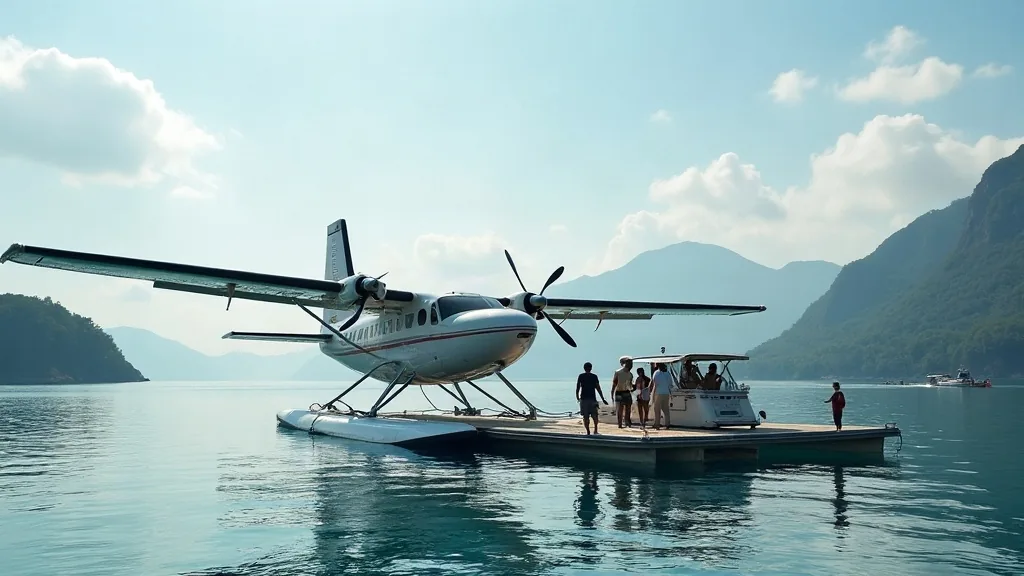
Seaplane charter logistics in Indonesia covers everything around the flight itself — airport-to-dock transfers, ground handling at certified water aerodromes, Jet A-1 fuel-stop planning, BMKG weather and sea-state windows, and coordination with Vessel Traffic Services (VTS) and coastal radio stations. Juara Holding Group’s desk builds this into one logistics plan for every charter it arranges, so a client is not chasing five separate vendors before departure day.
What is inside a logistics plan?
A charter is more than the aircraft. The desk maps six categories before a departure date is confirmed and shares the plan with the client’s travel coordinator.
| Category | What it covers | Who is responsible |
|---|---|---|
| Ground handling | Check-in, baggage, ramp coordination at the water aerodrome | Certified handler, arranged by the desk |
| Dock transfers | Vehicle-to-dock and dock-to-vessel connections | Local ground partner |
| Fuel stops | Jet A-1 availability for legs beyond single-tank range | Operator, confirmed pre-departure |
| Weather windows | BMKG rainfall and sea-state input for the go/no-go call | Pilot-in-command |
| Marine coordination | VTS and coastal radio notification | Water aerodrome organiser, per the 2025 regulation |
| Contingency | Diversion airfield, delay communication | Desk, on standby for the charter window |
Every row sits with a named party. The desk does not operate aircraft, hold the Air Operator Certificate (AOC), or run the water aerodrome — it coordinates the plan and works only with Indonesian-licensed CASR Part 135 AOC holders, since Indonesian aviation law reserves domestic passenger legs for Indonesian carriers.
How are fuel stops planned?
Payload and range decide whether a route needs a fuel stop. A Cessna 208A Caravan or DHC-6 Twin Otter in 9-seat configuration — the aircraft types recorded at Indonesia’s registered seaplane bases — trades passenger and baggage weight against fuel load, so a full cabin on a long sector often means a shorter non-stop range and a scheduled stop.
Jet A-1 pricing moves by location and by week. A 2025-2026 Indonesian fuel bulletin lists Jet A-1 at APT Pranoto Samarinda (AAP) at roughly 81.6 US cents per litre — about IDR 15,032 per litre including VAT and government tax — and at Pattimura Ambon (AMQ) at roughly 82.1 US cents per litre, about IDR 15,155 including tax. These two reference points show the band Jet A-1 sits in at eastern Indonesian airports; actual cost depends on the operator’s fuel contract at the stop used and is confirmed leg by leg, never quoted as a flat national rate.
No official published tariff exists for seaplane fuel surcharges. When a route needs a stop, the desk asks the operator for a written landed-cost estimate before confirming the itinerary, so the client sees the number before it is locked in.
How does weather decide the day?
BMKG (Indonesia’s meteorology, climatology and geophysics agency) tracks two seasons that shape charter planning: the rainy season generally runs October through March, and the dry season April through November, driven by the monsoon wind shift between Australia and Asia. BMKG’s Dry Season and Rainy Season Outlooks, ENSO and Indian Ocean Dipole monitoring, and monthly rainfall analyses (a July 2026 rainfall review among them) give operators a dated basis for planning rather than guesswork.
| Season | Typical months | Planning implication |
|---|---|---|
| Dry season | April – November | Wider daily departure windows, fewer weather holds |
| Rainy season | October – March | Morning departures preferred, buffer days recommended |
The pilot-in-command makes the go/no-go call using current conditions, not the seasonal average. CASR Part 91 also sets water-specific minimums: no take-off for a flight more than 50 nautical miles from shore without a life preserver or approved flotation device per occupant, and no flight beyond 30 minutes or 100 nautical miles from shore without specified survival equipment, including life preservers fitted with locator lights. The desk builds a buffer day into rainy-season multi-leg itineraries by default.
Who coordinates with marine authorities?
A water aerodrome is legally an airport in Indonesia — it must be certified or registered under CASR Part 139 sub-regulation 139.101. DGCA (Direktorat Jenderal Perhubungan Udara, the Ministry of Transportation’s civil aviation authority) applies water-aerodrome standards adapted from FAA Advisory Circular 150/5395-1, published domestically as CASR Part 139 Volume III. Keputusan Direktur Jenderal Perhubungan Udara Nomor KP 206 Tahun 2021 sets minimum specifications for water aerodromes handling seaplanes up to 30 seats, including a preferred water depth of 1.8 metres (1 metre minimum for single-engine aircraft) and a taxi channel at least 45 metres wide with direct access to shore facilities.
A ministerial regulation enacted 22 August 2025 (State Gazette 2025 No. 620) added a further layer: it defines the aerodrome water area used for seaplane movement, requires seaplane water operations to follow shipping-sector rules alongside aviation rules, and obliges the water aerodrome’s organiser to coordinate directly with coastal radio stations and Vessel Traffic Services (VTS) units covering that water. This is the organiser’s and operator’s legal responsibility, not the desk’s — but the desk confirms with the operator that this step is scheduled before telling a client a slot is final.
How booking works
- Brief the desk — dates, guest count, departure/arrival points, whether the route needs a fuel stop.
- Receive the logistics plan — handling, transfer, fuel and weather-window details alongside the operator’s quote.
- Confirm with the AOC holder — the Indonesian Part 135 operator confirms crew and the marine-coordination step.
- Fly with a standing contingency — the desk stays reachable through the charter window for delay updates.
| Add-on | What it includes | Typical timing |
|---|---|---|
| Standard logistics coordination | Ground handling + transfer confirmation | Included with every charter arranged through the desk |
| Multi-stop fuel planning | Written landed-cost estimate per stop | Added for routes beyond single-tank range |
| Weather-hold contingency plan | Buffer day + diversion briefing | Recommended October – March |
This logistics layer is included at no extra coordination fee with every charter arranged through Juara Holding Group’s desk, and is also available on its own for a seaplane charter already booked elsewhere — the desk reviews an existing itinerary and flags any gap in fuel, weather or marine-coordination planning before departure day.
Add logistics to your charter. Message the desk on WhatsApp at 6281139414563 or email bd@juaraholding.com with your route and dates. Juara Holding Group is an independent charter coordination desk, established 2015, arranging services with licensed Indonesian operators — it does not operate aircraft and is not affiliated with any named operator.
Frequently Asked Questions
Does the desk operate the seaplane or just arrange logistics?
Juara Holding Group is an independent coordination desk, not an aircraft operator. The flight is always flown by a licensed Indonesian CASR Part 135 AOC holder; the desk arranges and confirms the ground handling, transfers, fuel and weather-window plan around that flight, staying the point of contact if anything changes before departure.
Is fuel included in the charter price or billed separately?
Fuel is set by the operator, not published as a fixed national rate. For routes needing a stop, the desk requests a written landed-cost estimate using current Jet A-1 pricing at that airport before the itinerary is confirmed, so the client sees the figure before booking rather than after.
What happens if bad weather cancels a scheduled departure?
The pilot-in-command makes the go/no-go call based on current conditions, informed by BMKG data, not a seasonal assumption. The desk keeps a contingency plan — a buffer day or a diversion airfield — ready for rainy-season itineraries (October–March) and communicates any delay directly to the client.
Can the desk add logistics support to a charter booked with another operator?
Yes. The logistics-coordination layer — ground handling, fuel-stop planning, weather-window review and marine-coordination checks — is available even when the underlying charter was booked elsewhere. The desk reviews the existing itinerary and flags any planning gap before departure.
Who is responsible for coordinating with Vessel Traffic Services and coastal radio?
Under the ministerial regulation enacted 22 August 2025, the water aerodrome’s organiser is legally responsible for coordinating with VTS units and coastal radio stations covering that water. The desk’s role is to confirm with the operator that this step has been scheduled before calling a departure slot final.